

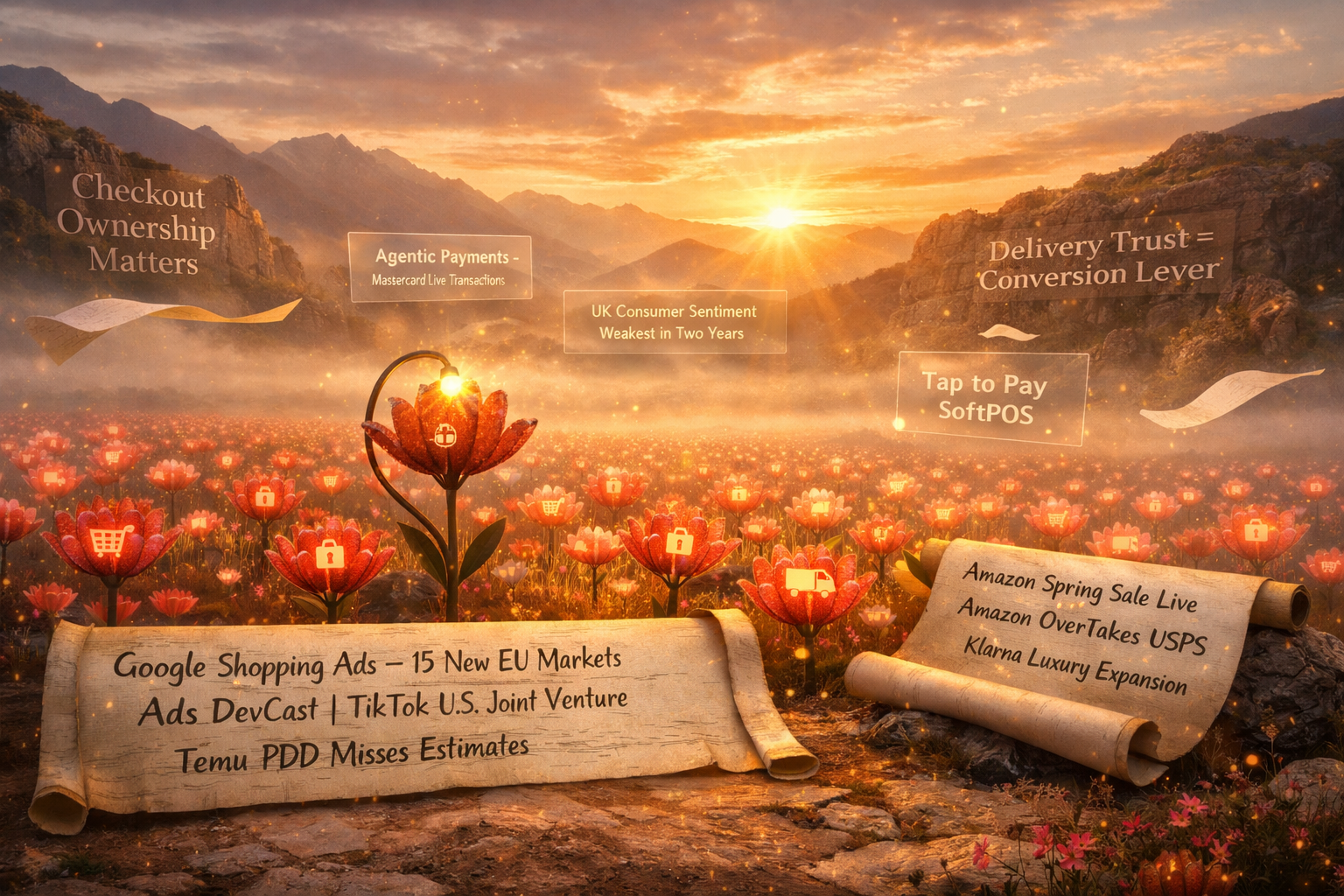
Daily Cross-Border E-Commerce Briefing | March 26, 2026 (Covering Mar 25–26 Releases)
1. Google Expands Shopping Ads to 15 New European Markets (Independent Stores Get More Room to Scale Product Discovery in Europe)
-
Google is expanding Shopping Ads availability to 15 additional European markets, giving more merchants the ability to surface products directly in high-intent search results with product images, prices, and brand signals. For Shopify and WooCommerce sellers, this matters because it lowers the barrier to testing demand in smaller European markets without relying only on Meta or marketplace traffic. Once product feeds are properly synced through Google Merchant Center, sellers can start capturing search demand from shoppers who are already close to purchase rather than merely browsing.
From a practical independent-store perspective, this is especially useful for sellers using lean catalogs or one-piece dropshipping models. Smaller EU markets are often overlooked, but they can become profitable if product feeds, localized shipping expectations, and tax-inclusive pricing are handled properly. Merchants should review feed quality, country targeting, currency display, and product titles before expanding, because Shopping traffic is less forgiving when price, availability, or delivery estimates are unclear. If your catalog is already organized, this rollout creates a new opportunity to test EU demand with more precision and less creative production overhead than a full social campaign.
Source: PPC News Feed, Published on: March 25, 2026
2. Google Launches Ads DevCast (Technical Ad Operations Are Becoming a Bigger Competitive Edge)
-
Google has introduced Ads DevCast, a new bi-weekly vodcast and podcast aimed at developers and builders working with Google Ads, Analytics, Display & Video 360, and related tools. On the surface, this looks like a product education move, but for ecommerce merchants it signals something larger: campaign performance is increasingly tied to technical execution, not just copywriting and media buying. As ad platforms become more automated, the merchants who understand integrations, data quality, measurement logic, and feed infrastructure will keep a larger advantage.
For independent-site sellers, the main takeaway is operational. If your store depends on paid traffic, you should treat tracking, product feed integrity, and API-based workflows as revenue infrastructure. Even simple stores benefit from cleaner event tracking, faster catalog updates, and better campaign troubleshooting. Sellers who test products through lightweight sourcing or one-piece fulfillment setups can use this trend to move faster than larger brands, but only if measurement is accurate enough to tell which SKUs, audiences, and creatives actually work. The era of “just launch ads and see” is fading; technical ad literacy is becoming part of growth strategy.
Source: PPC News Feed, Published on: March 25, 2026
3. TikTok Reassures Advertisers Under Its U.S. Joint Venture Structure (Traffic Opportunity Still Exists, but Sellers Need Platform Diversification)
-
TikTok used the NewFronts to pitch advertisers on a “new chapter” under its U.S. joint venture structure, emphasizing greater security, independence, and long-term advertiser confidence. For ecommerce merchants, this is important because TikTok remains one of the most efficient channels for product discovery, especially for visually demonstrable items, low-friction impulse products, and creator-led campaigns. A more stable advertiser narrative could encourage brands and agencies to keep investing in the platform despite past uncertainty.
However, independent sellers should not interpret this as a reason to become overdependent on one traffic source. TikTok can generate fast demand, but platform-level structural or regulatory shifts can still reshape campaign economics very quickly. A safer play is to use TikTok as an acquisition engine while capturing traffic into owned assets such as email, SMS, and retargetable first-party audiences. If you run a lean fulfillment model, it is especially important to align product selection with realistic delivery windows and refund risk, because viral demand is only helpful when post-purchase execution can keep up. TikTok is still valuable, but sellers should treat it as an accelerator, not a foundation.
Source: Marketing Dive, Published on: March 25, 2026
4. Temu Owner PDD Misses Estimates and Warns on Global Uncertainty (Cheap Cross-Border Models Are Facing More Pressure)
-
Reuters reported that PDD Holdings, the parent company of Temu, missed quarterly revenue and profit expectations and warned that domestic competition and global uncertainty would continue to affect performance. The report also highlighted the growing regulatory and policy pressure on Temu’s low-cost cross-border model, especially as more markets scrutinize direct-from-China parcel flows, platform conduct, and duty advantages. For independent ecommerce sellers, this is a meaningful signal that ultra-low-price international competition is no longer operating in as frictionless an environment as before.
The implication for Shopify and WooCommerce merchants is not that cheap competition disappears, but that the rules of competition are changing. Sellers who cannot win on pure price may gain ground by being more transparent on shipping times, maintaining better product pages, and avoiding categories where compliance or return friction is rising. For one-piece dropshipping sellers, this also reinforces the importance of product quality control and honest checkout messaging. When regulators, customs rules, and consumer trust pressures rise at the same time, the sellers who look more reliable and less “too good to be true” often convert better even without being the absolute cheapest option.
Source: Reuters, Published on: March 25, 2026
5. Amazon’s Big Spring Sale Goes Live (Independent Stores Should Expect More Discount Pressure and Faster Conversion Benchmarks)
-
Amazon’s Big Spring Sale is now live through March 31, featuring discounts across more than 35 categories, daily deal drops, Prime-exclusive offers, and additional AI-assisted shopping tools such as Rufus. For independent-store operators, the significance is less about copying Amazon’s exact event structure and more about understanding customer expectation shifts during major marketplace promotions. When Amazon floods the market with visible discounts, consumers become more price-aware, more comparison-driven, and less tolerant of vague shipping promises.
This is a good window for independent sellers to tighten conversion basics rather than panic-discounting everything. Stronger product pages, clear “processing time + shipping time” messaging, small bundle offers, and limited-time value framing can outperform broad margin-destroying sales. If you run flexible sourcing or one-piece dropshipping, consider pushing lightweight, easy-to-ship products that can handle promotional demand without causing delays. Merchants should also watch categories where Amazon discounts are especially aggressive, because that may temporarily raise CAC on paid channels and reduce conversion for generic products. The smarter play is selective positioning, not trying to out-Amazon Amazon.
Source: Amazon News, Published on: March 25, 2026
6. Amazon Overtakes USPS as the Largest U.S. Parcel Carrier (Delivery Competition Is Reshaping Customer Expectations)
-
FreightWaves reported that Amazon has overtaken the U.S. Postal Service as the largest domestic parcel carrier, underscoring how quickly last-mile delivery competition is evolving. Even if you do not sell on Amazon, this matters for independent ecommerce because shoppers compare every delivery experience they have, not just within one store. As Amazon’s shipping network becomes more dominant, consumers increasingly expect better tracking, faster status updates, and more predictable arrival windows from all online sellers.
For Shopify and WooCommerce merchants, the lesson is operational rather than emotional. You do not need Amazon-level delivery speed to compete, but you do need more credible promise management. Stores using one-piece fulfillment or supplier-direct dispatch should be especially careful not to overstate transit times just to improve conversion. Cleaner tracking visibility, proactive customer service, and product selection that matches your actual shipping capability can protect margins better than unrealistic speed claims. In 2026, delivery trust is a conversion lever, not just a back-end logistics detail.
Source: FreightWaves, Published on: March 25, 2026
7. payabl. Launches Tap to Pay SoftPOS for SME Merchants (Lower-Friction Payment Acceptance Keeps Expanding)
-
payabl. has launched a Tap to Pay SoftPOS solution that turns NFC-enabled Android smartphones into contactless payment terminals for micro and SME merchants. While this announcement sits closer to payments infrastructure than storefront software, it still matters for ecommerce sellers because it reflects the broader direction of merchant operations: lower hardware dependency, faster payment setup, and more flexible omnichannel acceptance. As more payment tools become software-first, smaller sellers can operate with less overhead and more agility.
For cross-border and independent sellers, the real strategic angle is simplification. The easier it becomes to accept payments across channels, the easier it becomes to blend online selling with pop-ups, local events, creator collaborations, or offline customer touchpoints. Even brands that primarily run online stores benefit from a more modular payment stack, because simplified acceptance often leads to easier expansion into new geographies or sales formats. Merchants should view this trend as another sign that payments are becoming more programmable, more portable, and more embedded into the selling workflow.
Source: The Paypers, Published on: March 25, 2026
8. Mastercard Completes Live Agentic Payment Transactions Across Latin America (AI-Initiated Commerce Is Moving From Theory to Infrastructure)
-
Mastercard announced successful live agentic payment transactions across Latin America and the Caribbean, involving 17 participating processors and issuers. This is one of the clearer signals that AI-initiated commerce is moving beyond demos and into real payment network infrastructure. For merchants, the significance is not only about AI checkout itself, but about what will matter inside that environment: clean product data, structured pricing, clear merchant identity, and trustworthy payment authorization rules.
Independent sellers should read this as an early warning and an opportunity. As AI agents become more involved in product discovery and even payment execution, messy catalogs and vague shipping or return terms will become even more costly. Stores using flexible sourcing or simple one-piece fulfillment models can still compete, but they will need stronger operational clarity so machines and customers can both trust what is being offered. This trend also suggests that global commerce may become more automated at the decision and payment layers, which makes data quality and checkout reliability increasingly strategic assets rather than back-office chores.
Source: The Paypers, Published on: March 25, 2026
9. Klarna Expands Partnerships Across Luxury, Fashion, and Payment Platforms (Flexible Payment Options Keep Spreading Into Higher-Intent Retail)
-
Klarna announced new and extended partnerships across luxury retail, fashion, and payment platforms in Europe, including Harvey Nichols in the UK. The expansion shows that flexible payment options are continuing to move deeper into mainstream and premium online retail rather than remaining limited to discount-focused ecommerce. For independent-site sellers, that reinforces a familiar but important point: checkout flexibility can materially influence conversion, especially in categories where basket sizes are higher or customer hesitation is stronger.
The practical takeaway is not that every store must immediately add BNPL, but that merchants should treat payment mix as part of conversion optimization rather than as a finance-only decision. If your product catalog includes giftable, lifestyle, or higher-ticket products, alternative payment methods may reduce friction and improve average order value. Sellers using lean sourcing models should still be cautious and align any flexible payment offer with return policy clarity, dispute handling, and real fulfillment reliability. Checkout convenience helps only when the rest of the order experience remains stable.
Source: The Paypers, Published on: March 25, 2026
10. UK Consumer Sentiment Falls to Its Weakest Level in Over Two Years (European Demand Testing Should Stay Focused on Value and Trust)
-
Reuters reported that UK consumer sentiment dropped to its weakest level in more than two years, according to a British Retail Consortium survey. For cross-border ecommerce sellers, this is not just a macro headline. It affects how shoppers behave: weaker confidence typically means greater price sensitivity, more comparison shopping, and more caution around discretionary purchases. For merchants targeting the UK, especially through Google Shopping, Meta ads, or influencer-led traffic, conversion may become harder if store trust signals and perceived value are weak.
Independent-store operators should adapt by sharpening value communication rather than defaulting to constant discounting. Product pages should answer practical concerns fast: what problem the item solves, how long delivery takes, what buyers can expect after ordering, and why the offer is worth the price. In uncertain demand environments, clean positioning often beats noisy promotion. Sellers using one-piece dropshipping or flexible product testing can still move quickly, but they should favor products with clearer utility, simpler expectations, and fewer refund triggers. When confidence declines, trust becomes even more commercial.
Source: Reuters, Published on: March 26, 2026


