

Daily Cross-Border E-Commerce Briefing | February 5, 2026 (Covering Feb 4 Releases)
1. Amazon’s Physical Grocery Push Intensifies the Last-Mile Speed Race (Delivery Expectations Keep Rising)
-
Reuters reports Amazon is doubling down on physical grocery to compete more directly with Walmart’s local store network. The most important signal for Shopify and WooCommerce merchants is not “groceries” — it’s the operational direction: faster, cheaper last-mile delivery is becoming a baseline consumer expectation in the U.S. When big players keep pushing same-day and next-day fulfillment, shoppers become less tolerant of vague delivery promises, long processing times, and unclear tracking updates.
For independent stores running a one-piece dropshipping model, this trend raises the cost of weak ops. Your product page must clearly state realistic processing time, shipping time, and tracking expectations, and your post-purchase flow should proactively answer the top questions (“When will it ship?” “Where is it now?” “What if it’s late?”). If you rely on paid traffic, tighten alignment between ads and delivery claims to reduce refunds and payment disputes. Speed is not only logistics — it is trust, conversion rate, and dispute control.
Source: Reuters, Published on: February 4, 2026
2. Turkey Scraps Online Duty-Free Trade; Temu and Shein Suspend or Restrict Sales (De Minimis Pressure Spreads)
-
Nikkei Asia reports Türkiye is ending duty-free online trade and Chinese platforms Temu and Shein have suspended or restricted cross-border sales ahead of the change. This is a high-signal policy story for cross-border sellers because it mirrors the global direction: regulators are tightening low-value parcel rules, raising taxes, and increasing scrutiny of cross-border ecommerce channels. Even if you sell on your own Shopify/WooCommerce site, the same customs reality hits your checkout experience: higher landed costs, stricter import thresholds, and more delivery friction can reduce conversion.
If you test products with a lean dropshipping workflow, treat this as a “market risk checklist” reminder before you scale ads into any country: confirm the latest import thresholds, expected taxes, restricted categories, and delivery documentation needs. Update your pricing and messaging so customers are not surprised at the border. In regulated markets, accuracy wins: transparent product descriptions, clear declared value practices, and realistic delivery promises reduce chargebacks and negative reviews.
Source: Nikkei Asia, Published on: February 4, 2026
3. Shein’s Brazil Manufacturing Plan Hits Supplier Pushback (Speed + Price Targets Can Break Supply Reliability)
-
Reuters details how Shein attempted to turn Brazil into a production hub, but local factories walked away after struggling with aggressive pricing and delivery requirements. For independent ecommerce sellers, the key lesson is supply reliability: when a platform or brand pushes extreme speed and price targets, suppliers may exit — and that can translate into stock instability, delays, or inconsistent quality. In dropshipping, a single supplier’s operational drift can quickly show up as refunds, disputes, and reputation damage.
Practical steps for Shopify/WooCommerce merchants: build a simple “supplier readiness” checklist before scaling a product. Verify processing time consistency, quality control standards, packaging expectations, and how quickly the supplier can handle variant changes or replacements. If your store is in rapid product-testing mode, prioritize suppliers that can consistently dispatch on time and provide trackable shipments. In 2026, reliability is a conversion lever — not just a backend detail.
Source: Reuters, Published on: February 4, 2026
4. U.S. Senators Unveil the SCAM Act Targeting Fraudulent Social Ads (Advertiser Verification May Tighten)
-
Reuters reports U.S. Senators introduced the Safeguarding Consumers from Advertising Misconduct Act (SCAM Act), which would require social platforms to take reasonable steps to combat fraudulent ads and verify advertisers’ identity or business legitimacy. For Shopify and WooCommerce sellers, this matters because paid social is a major growth channel — and enforcement pressure often leads to stricter ad verification, higher compliance demands, and more frequent account reviews.
If you are scaling with Facebook/Instagram ads (and similar platforms), prepare now: keep business documentation organized, maintain consistent brand identifiers (domain, company info, billing), and ensure your creatives and landing pages do not over-promise. Dropshipping stores should be especially careful with “too good to be true” price claims, vague delivery promises, and unsupported product performance statements — these issues can trigger policy actions or payment disputes. Strong compliance reduces downtime risk and protects your acquisition engine.
Source: Reuters, Published on: February 4, 2026
5. Shopify Subscriptions APIs Add New Payment Error Codes (Better Decline Diagnosis = Higher Recovery)
-
Shopify’s developer changelog announces new payment error codes for Subscription Billing Attempts in the Admin GraphQL API, improving granularity and consistency in how payment failures are categorized. Even if you are not building apps, the business takeaway is clear: payment failures are not one single bucket, and better classification helps you respond with the right recovery action (retry logic, customer prompts, or alternative payment methods).
For Shopify merchants running subscriptions or recurring billing, this kind of update supports stronger dunning workflows and more accurate reporting on why revenue is failing. For dropshipping sellers, the broader lesson is revenue protection: set up proactive payment recovery messaging, keep checkout friction low, and offer stable payment options for your primary markets. Payment decline rates compound quickly at scale — so treat payment diagnostics as a growth lever, not just a technical detail.
Source: Shopify Developer Changelog, Published on: February 4, 2026
6. Stripe Partners with PhotonPay to Expand Payment Methods and Uptime (Cross-Border Checkout Resilience)
-
Digital Transactions reports Stripe technology will support transactions for PhotonPay, aiming to widen payment method coverage, improve uptime, and simplify adoption for merchants expanding globally. For cross-border ecommerce, checkout resilience is a hidden conversion driver: regional payment preferences, processing stability, and currency handling can strongly affect approval rates and customer trust — especially when you sell internationally from a Shopify or WooCommerce storefront.
If you operate a lean dropshipping model, payment reliability is directly tied to dispute risk: failed payments, inconsistent confirmations, and delayed refunds create customer frustration and chargebacks. Action steps: review your top markets and ensure you support the payment methods customers expect (cards, local options where relevant), audit failed payment reasons in your dashboard, and monitor processor uptime during peak campaigns. Strong payment rails make international scaling smoother and reduce operational noise.
Source: Digital Transactions, Published on: February 4, 2026
7. Google Ads Automation in 2026: “Everything Is a Signal” (Clean Data and Tracking Matter More Than Tricks)
-
Search Engine Land argues that in 2026, Google Ads performance is increasingly driven by automation — and automation quality depends on the signals you feed it. For ecommerce, the “signals” are your conversion tracking integrity, product feed quality, audience inputs, and post-purchase outcomes (returns, cancellations, and real customer value). When signals are polluted (misattributed conversions, low-quality events, inconsistent product data), automated bidding can optimize toward the wrong buyers and waste budget efficiently.
For Shopify/WooCommerce sellers testing products via dropshipping, the practical implication is speed of learning: you need trustworthy data to decide which products deserve scale. Tighten your measurement stack (clean conversion events, consistent UTM structure, accurate product IDs), and align ad promises with the landing page and fulfillment reality. If your processing time varies, reflect it in your messaging — because late deliveries can increase refunds and erode the very conversion signals automation uses to learn.
Source: Search Engine Land, Published on: February 4, 2026
8. Logistics Disruptions Are Pushing Some Production Back Toward China (Capacity and Reliability Still Drive Sourcing)
-
Seatrade Maritime News reports that supply chain delays and logistics capacity issues in alternative manufacturing locations are contributing to some manufacturers returning production to China for stability. For cross-border ecommerce sellers, this is a practical sourcing signal: when capacity is constrained or infrastructure is inconsistent, reliability can outweigh theoretical cost savings. If your store relies on fast product iteration (a common dropshipping advantage), stable dispatch and predictable shipping performance often matter more than small unit-cost differences.
What to do as an independent seller: prioritize suppliers that can consistently ship on time, provide clear tracking, and handle peak-season volume without major delays. If you sell to the U.S. or Europe, keep a close eye on route stability and carrier capacity — and avoid promising aggressive delivery windows unless your supply chain can repeatedly meet them. Reliable dispatch plus clear customer communication is one of the easiest ways to reduce refund pressure while scaling paid traffic.
Source: Seatrade Maritime News, Published on: February 4, 2026
9. New Ecommerce Tools Roundup Highlights FedEx Post-Purchase Tracking/Returns, USPS Delivered Duty Paid, and Checkout Expansions (Ops and Conversion Tools Keep Evolving)
-
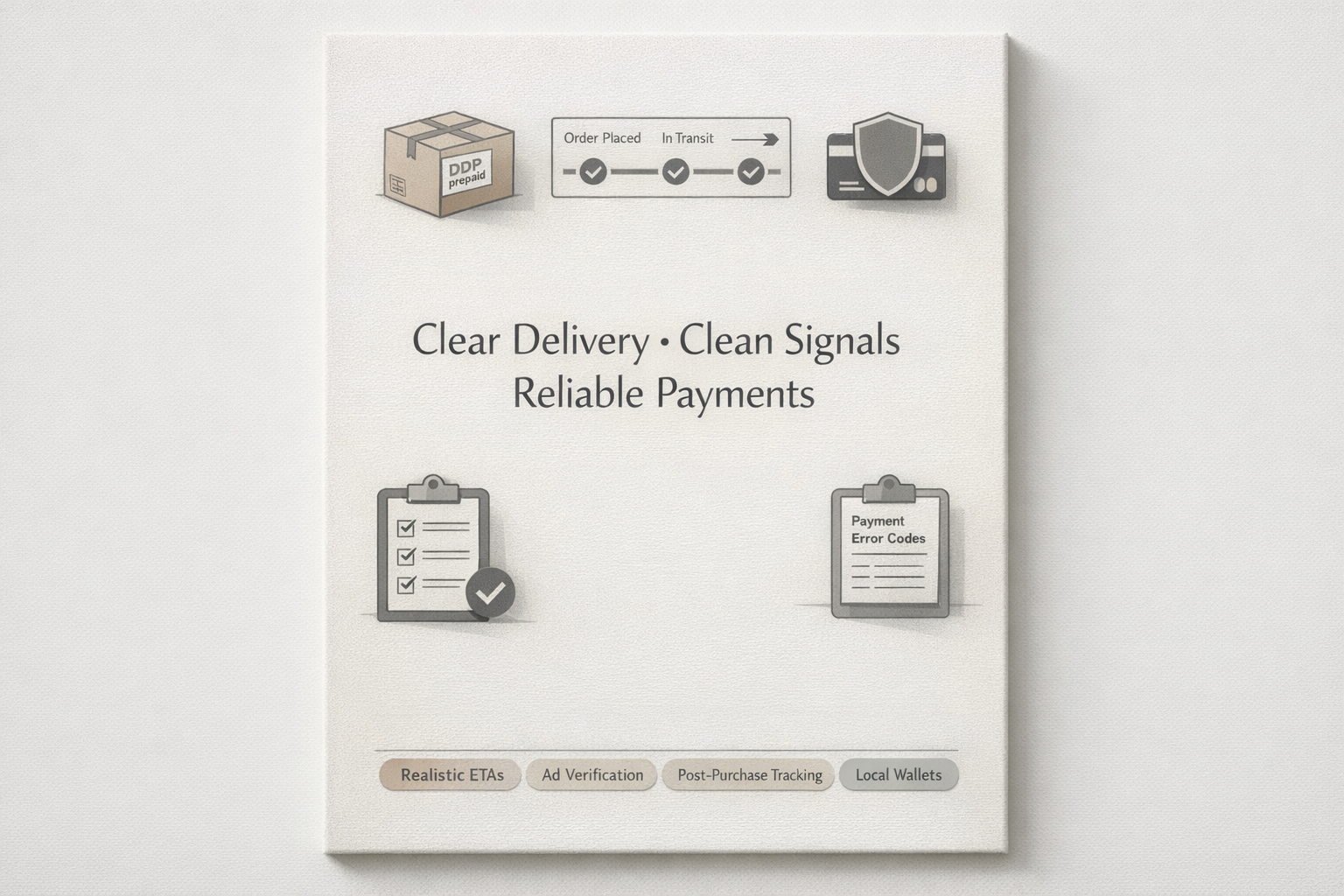
Practical Ecommerce’s weekly tools roundup includes several releases directly relevant to cross-border selling: FedEx announced enhanced post-purchase capabilities (tracking and returns tools designed for embedding into merchant channels), USPS launched a Delivered Duty Paid add-on to let senders prepay import duties/taxes where applicable, and multiple platforms highlighted expanded checkout and payment features. For independent stores, these updates point to a clear theme: post-purchase experience and landed-cost clarity are becoming core conversion drivers, not optional “nice to have” features.
For dropshipping sellers, the main advantage is reducing customer anxiety and support load. If you can set clearer delivery expectations, provide better tracking visibility, and reduce “surprise fees” at delivery, you can protect margin by lowering refund requests and chargebacks. Action steps: audit your post-purchase emails/SMS, make tracking easy to find, clarify import fee responsibility on your policy pages, and ensure your checkout messaging matches your real processing and shipping timelines.
Source: Practical Ecommerce, Published on: February 4, 2026


